
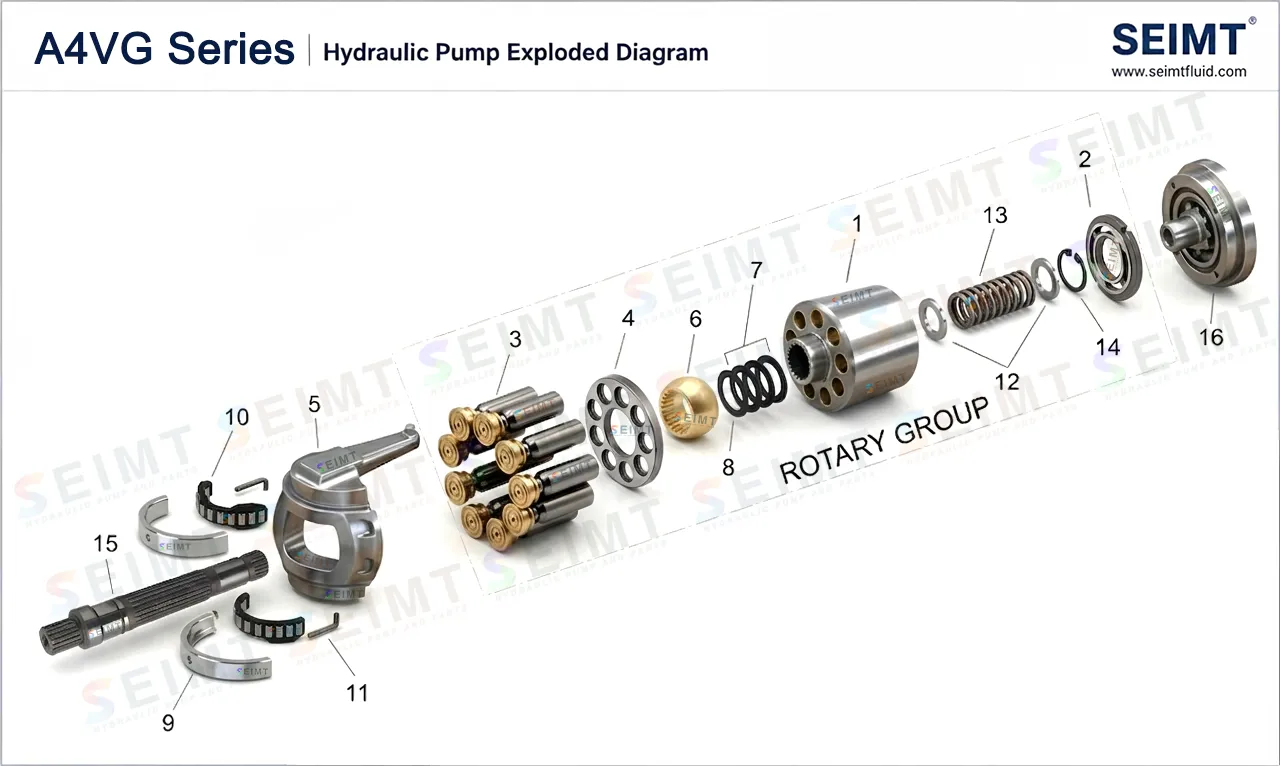
Figure 1: Bosch Rexroth A4VG pump assembly and internal rotating components.
Important Pre-Repair Note: A4VG pumps feature diverse control modules (HD, HW, EP, DG, etc.) and application specs. Always verify nameplate data, model codes, and exact dimensions prior to ordering spare parts or attempting disassembly. You can also refer to the Bosch Rexroth official documentation for factory standard baseline tolerances.
Quick Navigation / Table of Contents
1. Quick A4VG Hydraulic Pump Troubleshooting Matrix
Use this diagnostic reference matrix for fast A4VG hydraulic pump troubleshooting to correlate operating symptoms with potential root causes and recommended inspection procedures:| Síntoma | Probable Causes | Recommended Action |
|---|---|---|
| Low or No Output Pressure | Internal leakage, worn cylinder block/valve plate, defective control signal, insufficient charge pressure | Check charge pressure, measure case drain flow, inspect rotary group and control valve. |
| Excessive Case Drain Flow | Worn cylinder block face, scored valve plate, excessive piston-to-bore clearance | Disassemble and inspect complete rotating group clearance and surface flatness. |
| Excessive Noise / Cavitation | Inlet line restriction, low charge pressure, aerated fluid, worn piston shoes | Inspect suction lines and filters; measure charge circuit stability; check piston shoe play. |
| System Overheating | High internal slip/leakage, fluid contamination, cooler restriction, mechanical friction | Monitor case drain temperature, verify oil cleanliness, inspect valve plate and cylinder block. |
| Slow or Unstable Response | Control valve contamination, servo piston seal wear, binding swash plate bearing | Clean control orifices, inspect pilot pressures, check swash plate movement and seals. |
| Fuga externa de aceite | Hardened/cut shaft seal, damaged housing O-rings, loose fitting joints | Replace complete shaft and housing seal kit; verify shaft surface condition. |
2. In-Depth A4VG Hydraulic Pump Troubleshooting Workflows
A. Weak or Missing System Pressure
Loss of pressure directly impacts hydrostatic drive performance. Perform A4VG hydraulic pump troubleshooting in a logical order before removing the pump:- Check Charge Pressure: Ensure the auxiliary charge pump provides sufficient pressure to feed the closed loop and stroke the swash plate.
- Measure Case Drain Flow: High case drain volume under load indicates fluid bypassing internal running surfaces.
- Verify Control Input: Confirm hydraulic/electric control signals properly actuate the stroke control valves.
- Inspect Rotating Components: If external checks pass but pressure remains low, inspect the cylinder block face and valve plate for micro-scoring.
B. Cavitation and Noise Troubleshooting
Abnormal hydraulic noise typically originates from fluid aeration or mechanical degradation:- Inspect suction strainers and inlet hoses for collapsing inner liners or loose clamps letting air in.
- Ensure oil viscosity matches operating ambient temperatures and oil level is topped up.
- Check piston shoe retaining margins; excessive shoe play against the swash plate causes rhythmic knocking.
C. Overheating and Thermal Runaway
When hydraulic power converts into heat due to internal fluid slippage, effective A4VG hydraulic pump troubleshooting requires checking for fluid degradation:- Continuous leakage across worn metal surfaces generates localized high heat.
- Flush contaminated system fluid, replace return filters, and evaluate the full rotary group for wear.
3. Critical A4VG Components to Inspect During Repair
A successful overhaul requires methodical evaluation of all precision mating parts identified during the A4VG hydraulic pump troubleshooting phase:- Cylinder Block (Barrel): Check piston bore clearances and look for deep scratch marks or heat discoloration on the spherical end face.
- Piston Shoe Assembly: Inspect shoe thickness, looseness on the ball head, and scratching on the contact surface that touches the swash plate.
- Valve Plate: Examine running faces for cavitation erosion, radial scoring, or uneven friction wear between high-pressure ports.
- Retainer Plate & Ball Guide: Ensure flat, distortion-free holding of the piston shoes to prevent misalignment.
- Swash Plate & Cradle Bearings: Verify smooth swash movement without detents or pitting on the sliding bed.
- Eje de transmisión: Inspect spline teeth for step wear, keyway play, and radial grooves where the main lip seal contacts.
4. A4VG Spare Parts Selection Matrix by Frame Size
Once A4VG hydraulic pump troubleshooting determines which parts have failed, use the structural matrix below to find suitable replacement components for your pump overhaul:| Frame Size | Rexroth A4VG Models Covered | Available Spare Parts |
|---|---|---|
| Small Frame | A4VG28, A4VG40, A4VG56, A4VG71, A4VG90 | Rotary Groups, Cylinder Blocks, Piston Shoe Sets, Valve Plates, Retainer Plates, Drive Shafts, Seal Kits |
| Medium Frame | A4VG105, A4VG110, A4VG125, A4VG140, A4VG145 | Rotary Groups, Cylinder Blocks, Valve Plates, Swash Plates, Bearings, Seal Kits |
| Large Frame | A4VG175, A4VG180, A4VG210, A4VG250, A4VG280 | Complete Rotary Groups, Cylinder Blocks, Valve Plates, Swash Plates, Bearings, Repair Kits |
5. Repair Strategy: Juego de juntas vs. Complete Rotary Group
Choosing the right maintenance scope minimizes downtime and avoids premature secondary failures:When to Replace Seal Kit Only:
- External oil leaks around shaft seals or housing joint faces.
- Scheduled preventive maintenance interval.
- Metal running surfaces (block, valve plate, shoes) show zero scratching, erosion, or heat damage.
When to Replace Complete Rotary Group:
- Excessive case drain flow causing pressure loss.
- Contaminated fluid has scored cylinder block or valve plate.
- Piston shoes are worn loose or swash plate face is deeply grooved.
- Overhauling a high-hour pump to ensure long-term reliability.
6. Frequently Asked Questions (FAQ)
Q1: Should I replace just the seal kit or the entire A4VG rotary group?
Replace only seals if your pump leaks externally but maintains full working pressure and shows no internal metallic wear. If the pump suffers from power loss, high temperatures, or elevated case drain flow, the rotary group requires full replacement.
Q2: Can I order A4VG spare parts using only the pump displacement (e.g., A4VG90)?
No. The displacement alone is insufficient. You must provide the full nameplate model code, series number, and rotation direction because valve plates, shafts, and control seals vary significantly by specification.
Q3: What is the primary cause of excessive case drain flow in Rexroth A4VG pumps?
Excessive drain flow is primarily caused by internal fluid slippage between worn rotating surfaces—most commonly between the cylinder block face and the valve plate, or worn piston-to-cylinder clearances.
Need Technical Assistance or A4VG Spare Parts?
Send us your complete pump nameplate photo or part codes. Our hydraulic engineers will confirm exact part fitment and provide a fast quotation.
Get A Quick Quote / Contact Us → English
  Español
  Français